


Who it is for
For those who would like something extra with their massage, or simply want to rest quietly under the light – for example with a stiff back, a sore neck or after sport.
The light I use
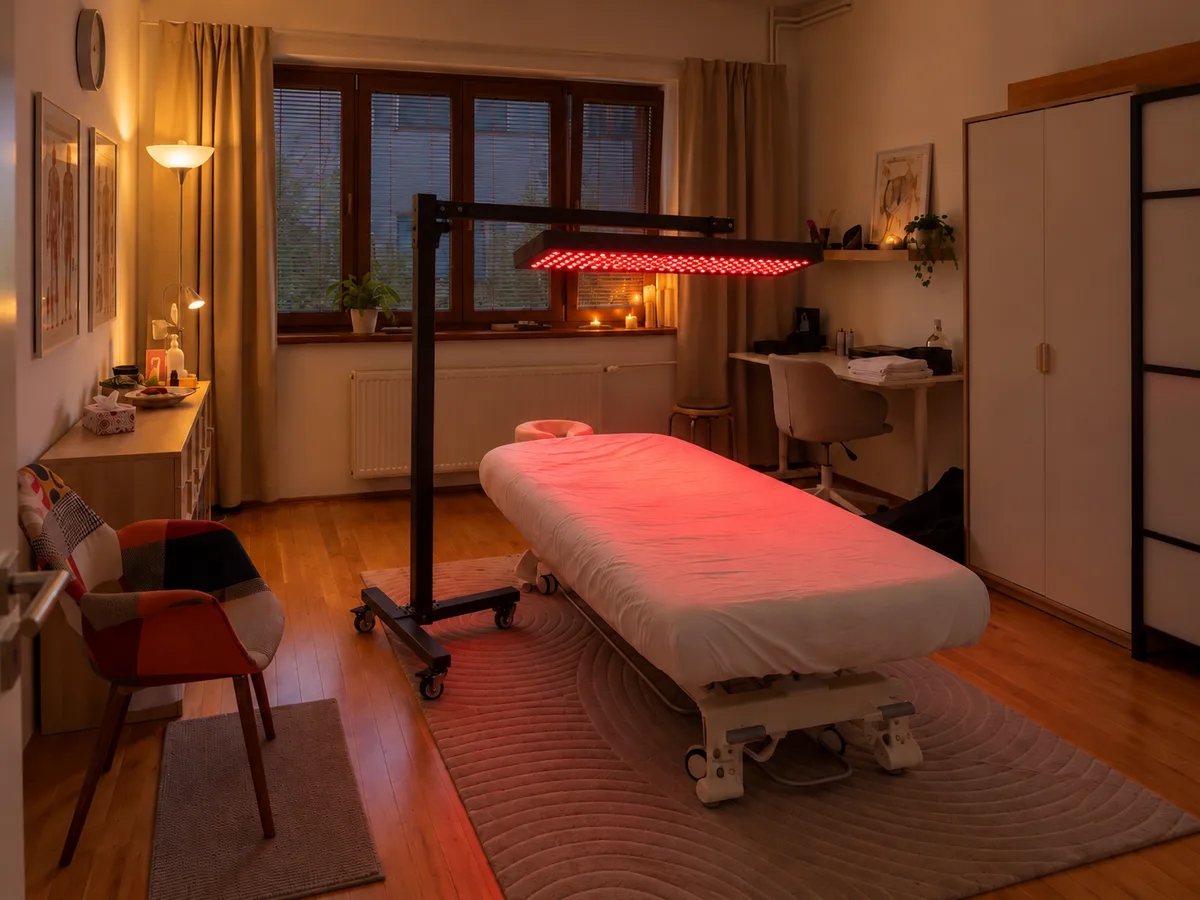
A panel with 288 diodes – six wavelengths of red and near-infrared light (630–850 nm); the light does not flicker. It stands on a mobile stand, so I can aim it at the back, legs or chest.
Modes – which one to choose
- Red light only (630–670 nm) – a shorter wavelength. Most of the energy is absorbed by the skin and the layer just beneath it, so it suits the skin and the surface of the body.
- Infrared light only (810–850 nm) – a longer wavelength that the eye can barely see. It reaches deeper, to muscles, tendons and joints close to the surface – for example a stiff back, a knee or a shoulder. Exactly how deep is not yet known.
- A combination of both – the most common choice when you are not sure or several things bother you at once.
- Tailored – the panel can set the strength of each wavelength separately. Tell me what troubles you and I will set it accordingly.
What happens
You lie or sit in front of the panel, wearing protective glasses, and the light shines on the area that troubles you. Nothing hurts; you only feel a little warmth. During a massage I shine the light on one area while I work on another – the appointment does not get any longer.
Cupping: during a stand-alone session you can ask for cups to be applied – we will agree on it on the spot.
What to expect
A pleasant add-on, not a miracle. Studies support it most for neck pain, knee osteoarthritis and sore shoulder tendons. More light does not mean more benefit, so I keep to the recommended times.
How to book it
- On its own: in the booking, choose Red Light Therapy (20, 40 or 60 minutes).
- With a massage: tick Red light in the last step of the booking.